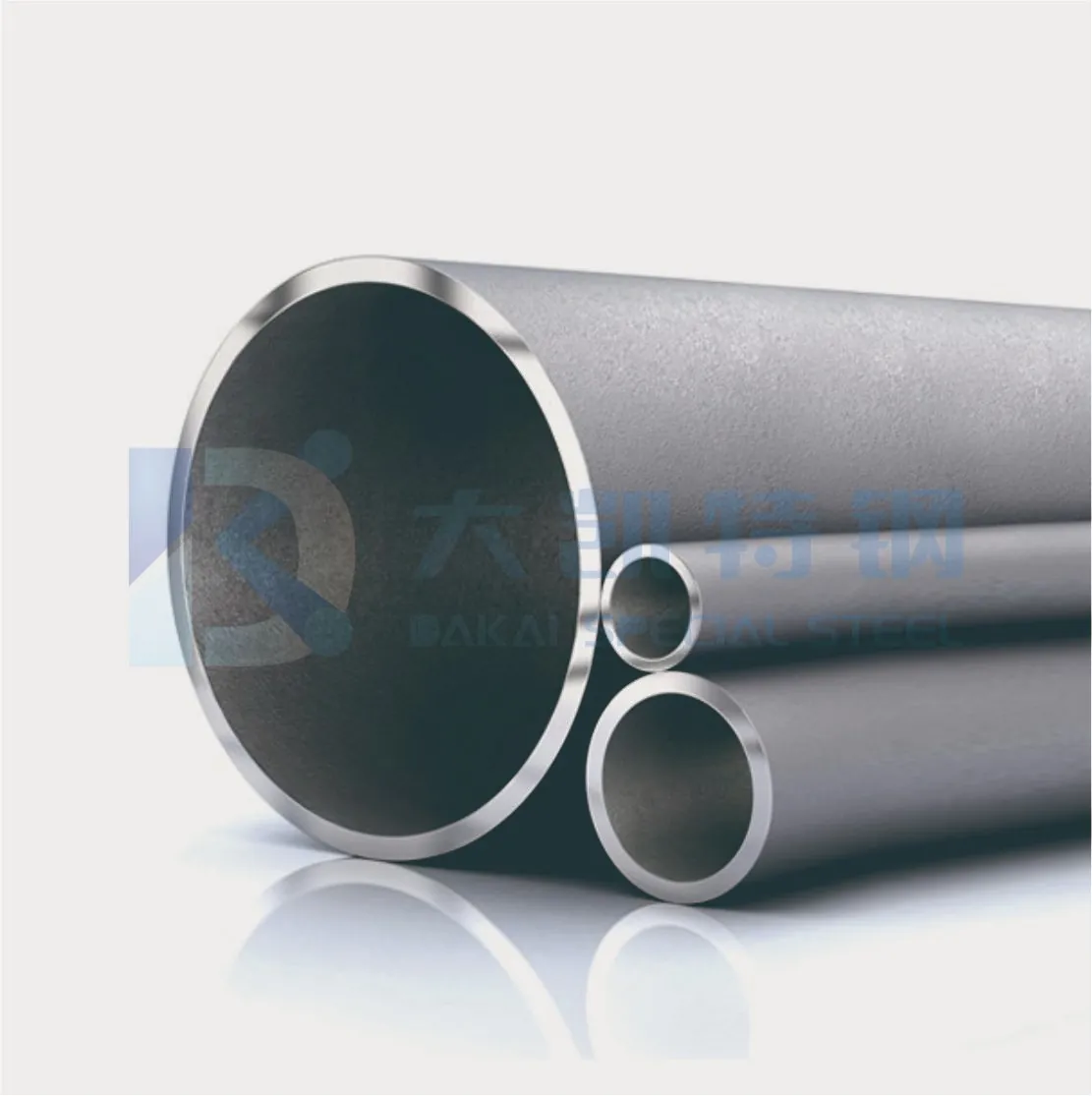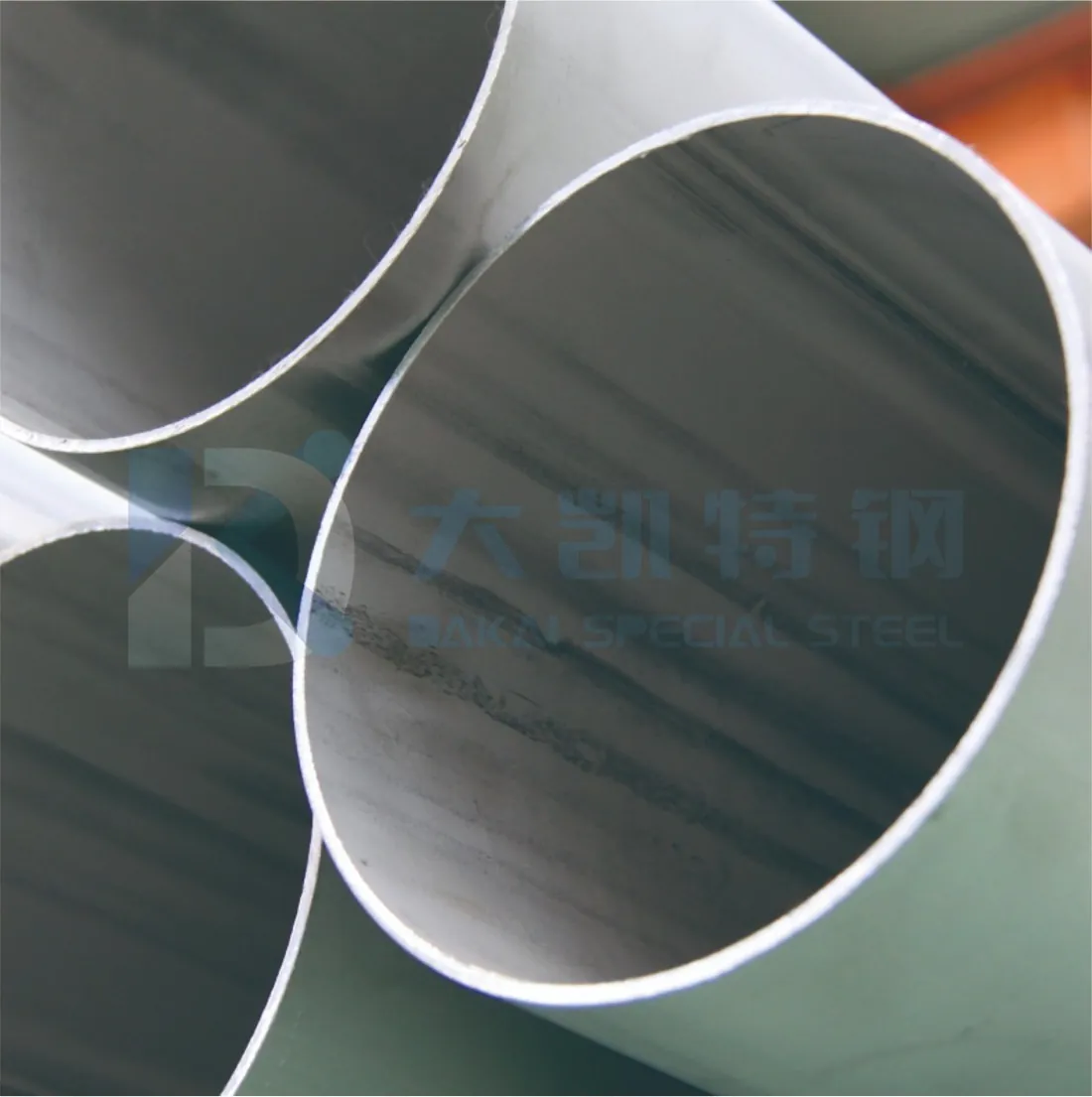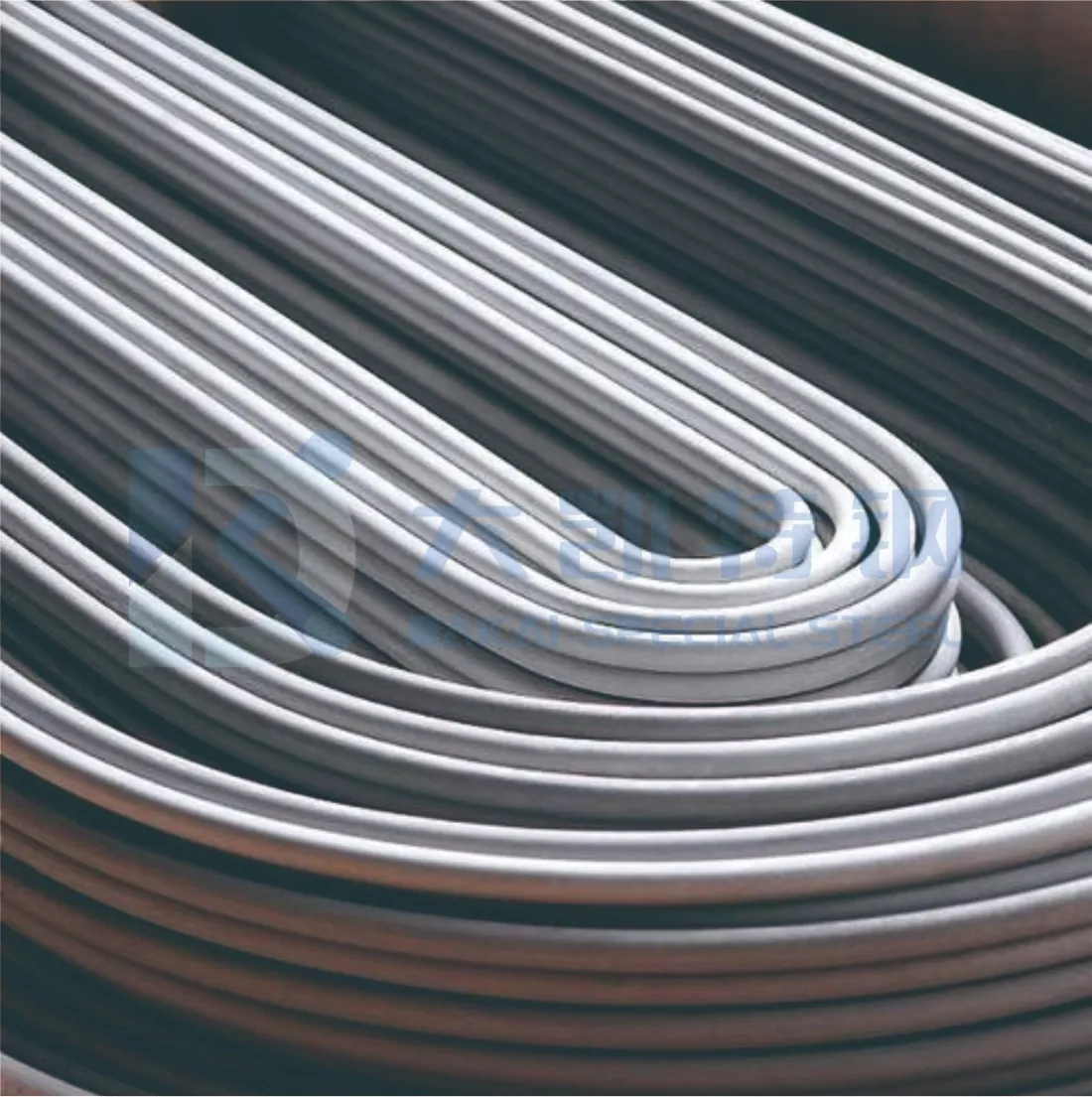
316L vs 304 Stainless Steel Pipe: Which Grade for Your Process
316L adds 2.0-3.0% molybdenum to resist chloride pitting and crevice corrosion; 304 costs less and suits chloride-free indoor service.
By Dakai Steel Technical Team
The choice between 316L and 304 stainless steel pipe usually reduces to one alloying difference. 316L contains 2.0-3.0% molybdenum; 304 contains none. That addition is what improves resistance to pitting and crevice corrosion in chloride-bearing service, and it is the main reason 316L costs more.
The one difference that decides most cases
Molybdenum works at the weak points of the passive film. Chloride ions attack the chromium-oxide layer at inclusions and surface defects; once a pit starts, the local chemistry inside it turns acidic and the pit deepens. Mo slows that dissolution and helps the film repassivate. The effect is captured by the pitting resistance equivalent number, PREN = %Cr + 3.3 x %Mo + 16 x %N. Type 304 lands around 18-20; type 316L lands around 24-26. A higher PREN shifts the critical pitting temperature upward, which is why the same water can be harmless to 316L and aggressive to 304.
Chemical composition side by side
Under ASTM A312, A213 or A249 the grade limits are these. Type 304: carbon 0.08% max, chromium 18.0-20.0%, nickel 8.0-11.0%, manganese 2.00% max, silicon 0.75% max, no molybdenum. Type 316L: carbon 0.030% max, chromium 16.0-18.0%, nickel 10.0-14.0%, molybdenum 2.0-3.0%. 316L carries slightly less chromium and more nickel; the molybdenum is what makes the difference in chloride service. Carbon is the second difference: at 0.030% max, 316L stays below the level at which chromium carbides precipitate in the 450-850 C range, so a weld heat-affected zone keeps its corrosion resistance without a post-weld solution anneal. A 304 weld in dry, chloride-free service is normally acceptable; the low carbon of 316L matters most when welded pipe sees chlorides or acids.
Where 304 is the right choice
304 is the correct grade for a large share of tonnage: indoor process and utility lines, general industrial water without chlorides, food and beverage contact surfaces, architectural and decorative work, and sheltered outdoor locations. It welds and forms easily, and its lack of molybdenum keeps both base price and alloy surcharge lower. If the wetted circuit is chloride-free and the pipe will not see coastal air or chloride-based cleaning agents, 304 delivers the same mechanical performance at lower cost.
Where 316L earns its extra cost
316L is specified where chlorides are present or where the surface cannot be repassivated after every weld: chemical and petrochemical lines handling chloride-bearing streams, sulphuric and phosphoric acid solutions, marine and offshore piping including deck drains and seawater systems, pharmaceutical clean steam and water-for-injection circuits, CIP loops using chloride sanitizers, coastal pipe racks, and open cooling-water loops where chloride concentrates through evaporation. In these services the molybdenum addition is not a margin; it separates a ten-year line from a two-year failure.
Mechanical properties and what changes
Minimum properties under ASTM A312 are close enough that the choice rarely turns on strength. Type 304: tensile strength 515 MPa min, yield strength 205 MPa min, elongation 35% min. Type 316L: tensile strength 485 MPa min, yield strength 170 MPa min, elongation 35% min. Both are austenitic and non-magnetic when annealed. The lower carbon and higher nickel of 316L cost a little tensile and yield strength; the grade is selected for corrosion resistance after welding, not for load capacity. Above room temperature, design to ASME B31.3 allowable stresses rather than these minimums.
A decision rule
Run four checks before the grade is fixed. First, chloride: what is the chloride concentration, temperature, pH and flow regime? Above roughly 200 mg/L at ambient, or any chloride with a wall temperature above about 60 C, specify 316L and verify against PREN and critical pitting temperature data. Second, welding: if the joint sits in corrosive service and no post-weld anneal is planned, the 0.030% carbon limit of 316L removes the sensitisation risk. Third, budget: if the circuit is chloride-free, indoor and dry, 304 is the lower-cost answer. Fourth, exposure: coastal air, salt spray and outdoor washdown push the decision to 316L; where chlorides are high and temperatures elevated, compare 316L against a duplex grade before committing.
Send the medium, chloride level, temperature and pressure, together with the standard, size and quantity, and we will quote the grade and specification that fit the service.