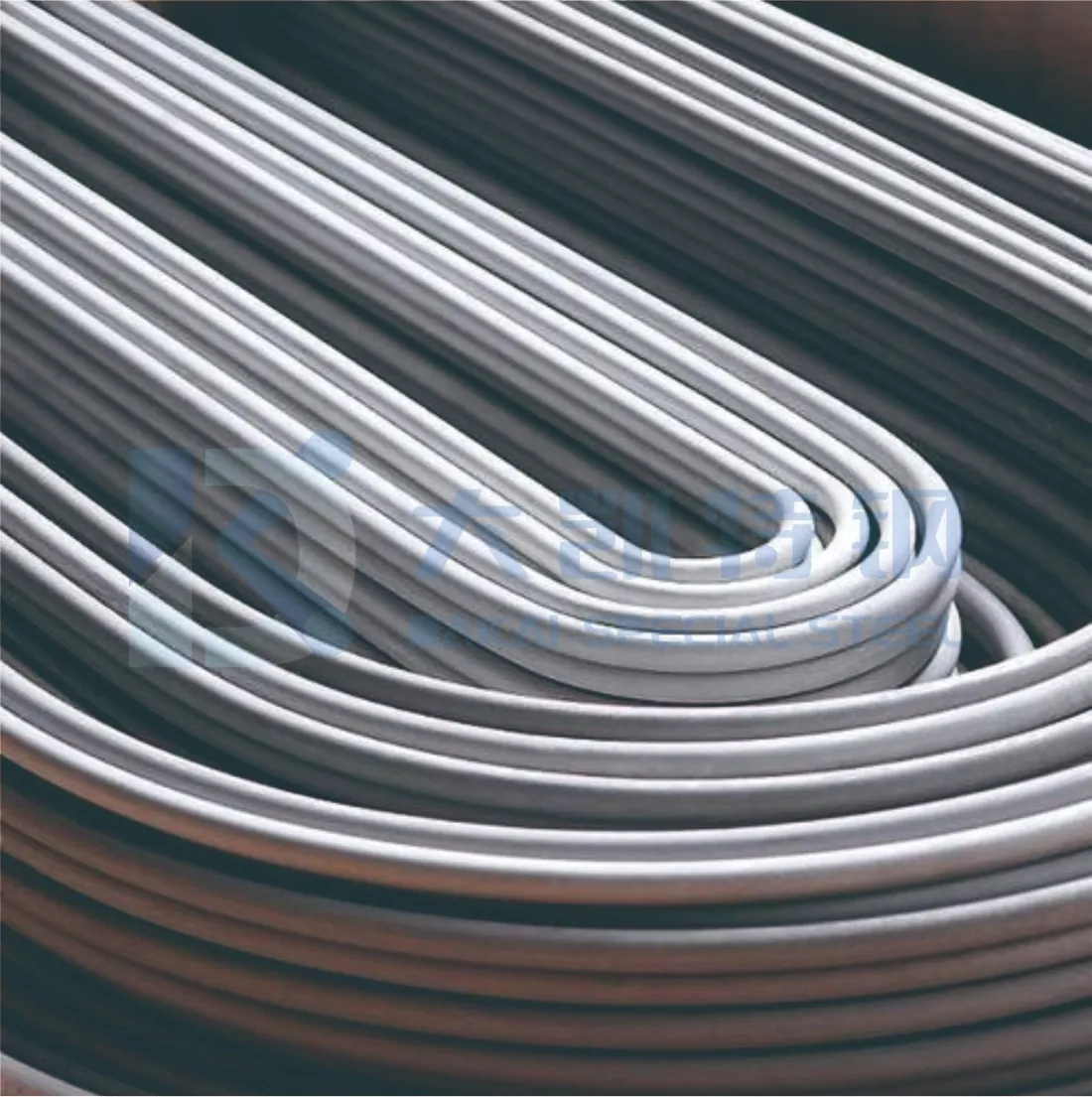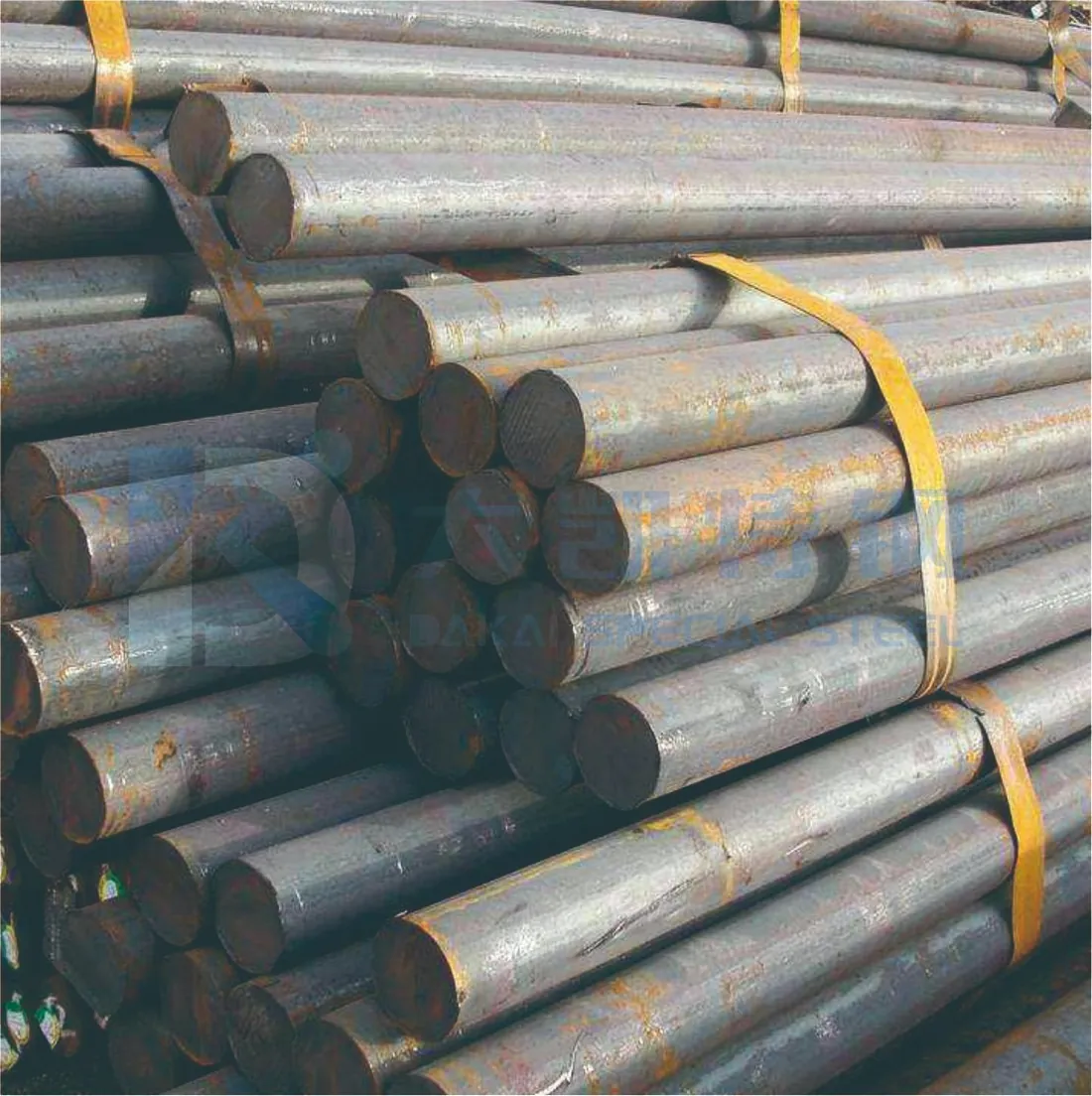
Tubería superdúplex 2507 para líneas submarinas: PREN y por qué importa
La tubería superdúplex 2507 (UNS S32750) aporta un límite elástico ≥550 MPa y PREN ≥40 a las líneas submarinas: reduce el espesor de pared y resiste picaduras y corrosión por rendijas frente a los cloruros.
Por Dakai Steel Technical Team

2507 is a super duplex stainless steel — UNS S32750, EN 1.4410, also listed as F53 — used for deep-sea line pipe where high strength and chloride corrosion resistance together set the wall thickness. Below are the grade, its PREN, and four points to fix in a purchase order.
What 2507 is
2507 has a duplex microstructure of roughly 50% austenite and 50% ferrite. The specified composition is Cr 24.0–26.0%, Ni 6.0–8.0%, Mo 3.0–5.0% and N 0.24–0.32%, with C ≤0.030%, Mn ≤1.20%, Si ≤0.80%, P ≤0.035% and S ≤0.020%. The ferrite carries strength; the austenite supplies toughness and weldability, so the grade is normally solution-annealed and water-quenched rather than cold-worked. Product forms follow ASTM A789/A790 for seamless tube, A928 for welded pipe, A182 F53 for forgings and A815 for fittings, usually combined with DNV-ST-F101 or ISO 13623 for line pipe.
Why deep-sea line pipe
Deep water loads a line pipe three ways at once: high external pressure and installation tension, a produced fluid that may carry chlorides and CO2, and external seawater that never dries out. A 550 MPa minimum yield allows a thinner wall than 316L for the same internal pressure, reducing submerged weight, top tension and installation-vessel payload. Collapse resistance, handling and welding often set the final wall, so it is not simply the pressure calculation. 2507 resists chloride pitting, crevice corrosion and chloride stress corrosion cracking far better than the austenitic grades, but it is not immune to sulphide stress cracking; sour service must still be checked against ISO 15156 / NACE MR0175.
PREN and what it tells you
PREN is calculated as %Cr + 3.3(%Mo + 0.5%W) + 16%N. A heat at 24% Cr, 3.5% Mo and 0.24% N calculates to about 39.4, and mill heats normally report 42–43; orders commonly state PREN ≥40 as the acceptance floor. For comparison, 316L sits near 25 (17% Cr, 2.5% Mo, no N) and 2205 in the 34–38 band. PREN ranks alloys for pitting initiation in chloride media; it is not a design stress and says nothing about crevice geometry, temperature, oxygen, flow or H2S. Treat it as a first screen, then confirm with ASTM G48 practice A or B critical pitting temperature testing.
Mechanical properties
At room temperature 2507 requires minimum tensile strength 800 MPa, 0.2% offset yield 550 MPa, elongation at least 15% and hardness not over 32 HRC (about 300 HB). 316L requires 485 MPa tensile and 170 MPa yield, so the yield gap is a little over three times. Thermal expansion is about 13 × 10⁻⁶/K against roughly 16 × 10⁻⁶/K for 316L, which lowers restrained thermal stress in long lines. Allowable stress falls with temperature; most specifications cap continuous service well below the austenitic range, so use the design-code derating curve, not room-temperature values.
Where else it is used
The same combination of strength and chloride resistance puts 2507 into seawater reverse-osmosis trains and brine lines, offshore platform process and firewater piping, sour gas flowlines and tubing where the H2S and CO2 partial pressures allow it, and chemical plant handling chlorinated or acidic streams. It is a common upgrade where 2205 is marginal on pitting or where weight and wall thickness matter more than the alloy premium.
What to ask before ordering
Four items belong in the enquiry, not in the post-award discussion. First, an EN 10204 3.1 mill test certificate per heat with actual chemistry, mechanical results and heat-treatment record; ask for 3.2 with an independent witness if required. Second, ferrite content 35–55% by metallographic count to ASTM E562 or a calibrated magnetic method, reported per heat and after welding. Third, non-destructive testing — ultrasonic for wall and seam, eddy current or dye penetrant for surface — with acceptance criteria named, plus hydrostatic test pressure. Fourth, the 3.2 third-party scope: which operations are witnessed, what notice is given, and who signs the release. Put the standard, grade and UNS number on one line so there is no substitution.
Send the chloride content, design pressure, temperature, and required outside diameter, wall thickness and standard; we will quote 2507 against 2205 and 316L with the wall each grade actually needs.