Guía de selección de tubos de acero inoxidable para intercambiadores de calor
Ajuste ASTM A213 o A249, diámetro exterior y espesor, forma recta, en U o con aletas, y grado a la función del intercambiador, con certificado 3.1 para cada lote.
Por Dakai Steel Technical Team
Four decisions fix a heat exchanger tube order: standard, outside diameter and wall thickness, form — straight, U-bend or finned — and grade. Tolerances, test pressure and documentation follow from those four.
Standard: A213 versus A249
ASTM A213 covers seamless stainless tube for heat exchangers, condensers, superheaters and boilers; ASTM A249 covers welded tube. The seam is the practical difference. A213 is ordered where design pressure, cyclic duty or corrosive service makes a weld seam unacceptable. A249 is strip-welded, annealed and eddy-current tested over its full length, and costs less at equal size. Both fix chemistry, tensile properties, hardness and testing, but the welded joint factor is below 1.00, so a tube cannot move from A213 to A249 without re-running the pressure calculation. GB/T 13296 is the Chinese seamless equivalent; quote the standard explicitly, because dimensions and test clauses do not map one-to-one.
Tube dimensions and wall thickness
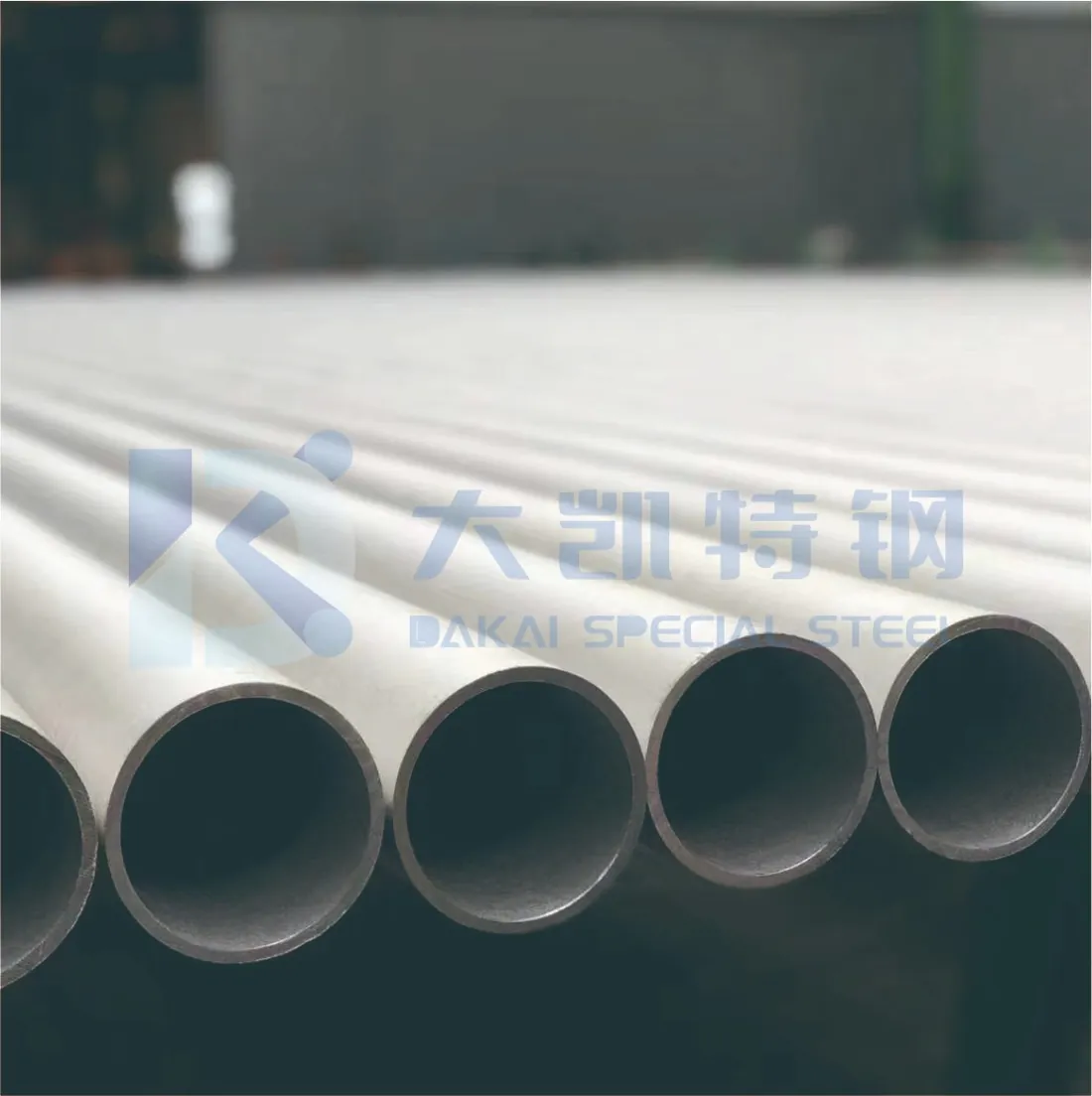
The range runs from 6 mm to 76 mm outside diameter and 0.5 mm to 5 mm wall, in straight lengths up to 24 m. Small diameters 6–25 mm suit compact shells and high tube counts; 25–76 mm suits larger duty with fewer, thicker tubes. Wall thickness is a design output, not a catalogue choice: start from the pressure formula with the correct allowable stress and joint factor, add corrosion and erosion allowance, then check the bend. A tube adequate when straight can be under-thickness on the outside of a tight U-bend, where the wall thins and work-hardens. Use minimum wall, not average wall, in the pressure calculation, and check the tolerance band before fixing the nominal size.
Straight, U-bend and finned
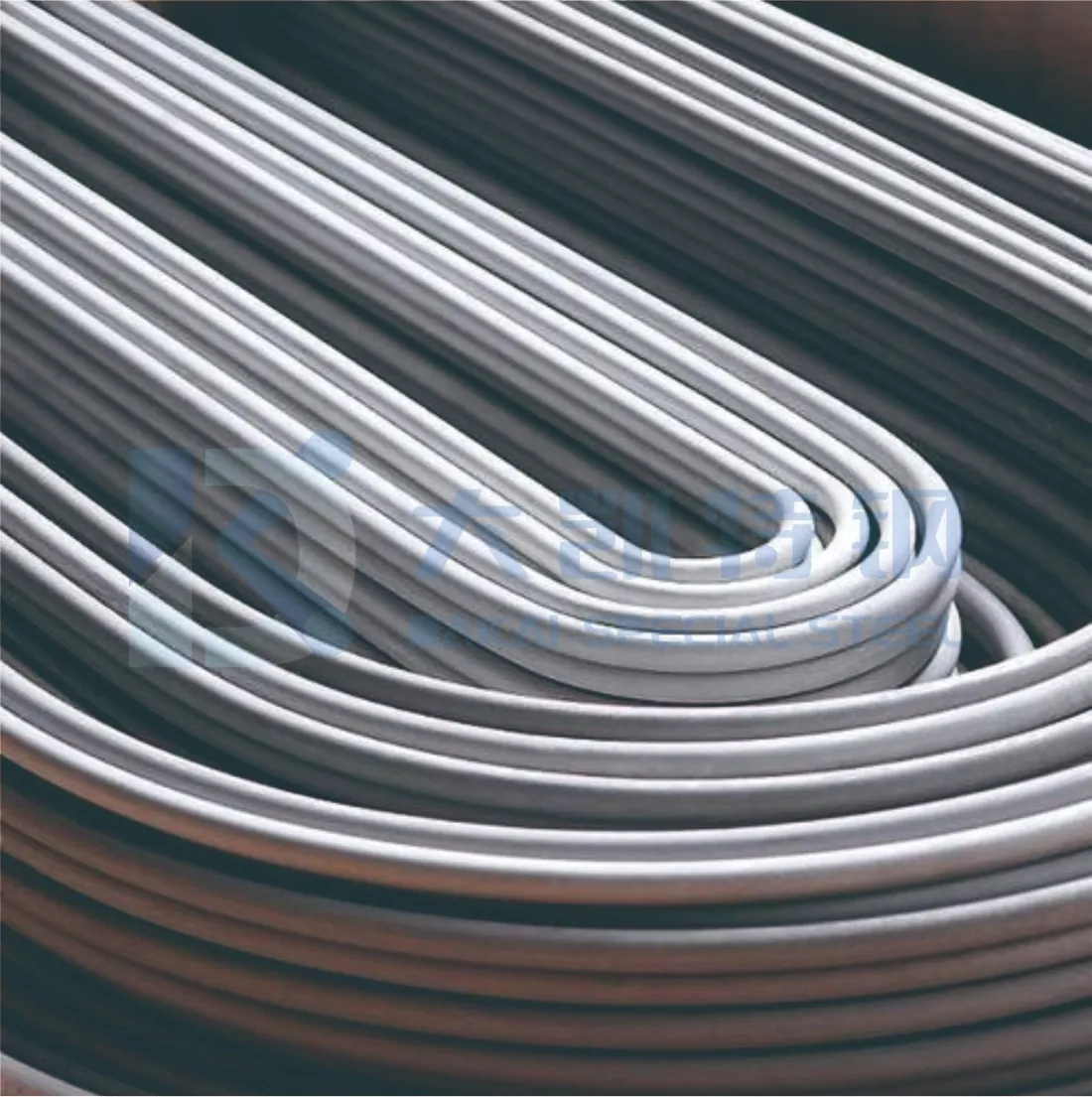
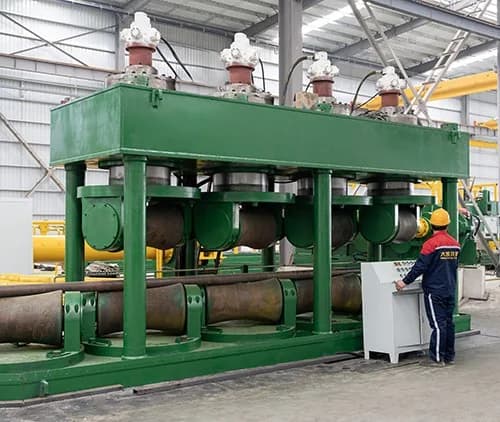
Straight tube ships cut to length with square-cut or bevelled ends. U-bend tube is bent to the drawing: leg lengths, bend radius, bend plane and tube-end spacing are fixed by the tube sheet layout, and the minimum radius is typically 1.5 times outside diameter for a close-pitch bundle. Cold bending work-hardens the outer wall and leaves residual stress, so U-bends for corrosive or cyclic service are stress-relieved; solution annealing is available where specified. Low-fin tube is the third option: integral fins rolled onto the outside multiply external area by roughly 2.5 to 3.5 times, raising the overall coefficient when the shell-side film controls, as in air coolers and condensers.
Grade selection for heat transfer
TP304 and TP316L cover most shell-and-tube duty. 304 suits clean, chloride-free water and non-corrosive process streams; 316L adds 2.0–3.0% molybdenum and is the default where chlorides are present — cooling water, brackish water and chemical streams. The limit is chloride stress corrosion cracking: stressed austenitic tube becomes vulnerable above roughly 60 °C as chloride concentration rises, and extra wall thickness does not fix it. Duplex grades answer it: 2205 (PREN about 34–36) and 2507 (PREN about 40–43) carry roughly twice the yield strength of austenitic tube, resist chloride SCC and pitting, and allow a thinner wall at the same design pressure.
The trade-off is conductivity. Austenitic stainless runs about 16 W/m·K and duplex about 19 W/m·K, against roughly 50 W/m·K for carbon steel, so stainless is selected for corrosion resistance and cleanability, not conduction. Where heat transfer is tight, the answer is usually thinner wall — which duplex's higher allowable stress permits — or extended surface. 2507 is normally limited to about 300 °C continuous; above that, 304 or 316L may still be the better choice.
Testing and documents
Each lot is tested before dispatch: hydrostatic pressure test at the specified pressure, full-length eddy current test for seam and wall defects, flattening test to expose transverse flaws, and hardness test to confirm heat treatment. Reverse flattening, flare and tensile tests are added when specified. Dimensional checks cover outside diameter, wall, length, bend radius and ovality. Every batch ships with an EN 10204 3.1 mill test certificate listing heat number, grade, chemical analysis, mechanical properties and test results; the heat number on the bundle tag ties the tube to that certificate. PMI, third-party inspection and 3.2 certification are available on request.
Send the medium, operating temperature, design pressure and tube size — outside diameter, wall, length and whether straight, U-bend or finned — and we will confirm standard, grade and wall, then quote.