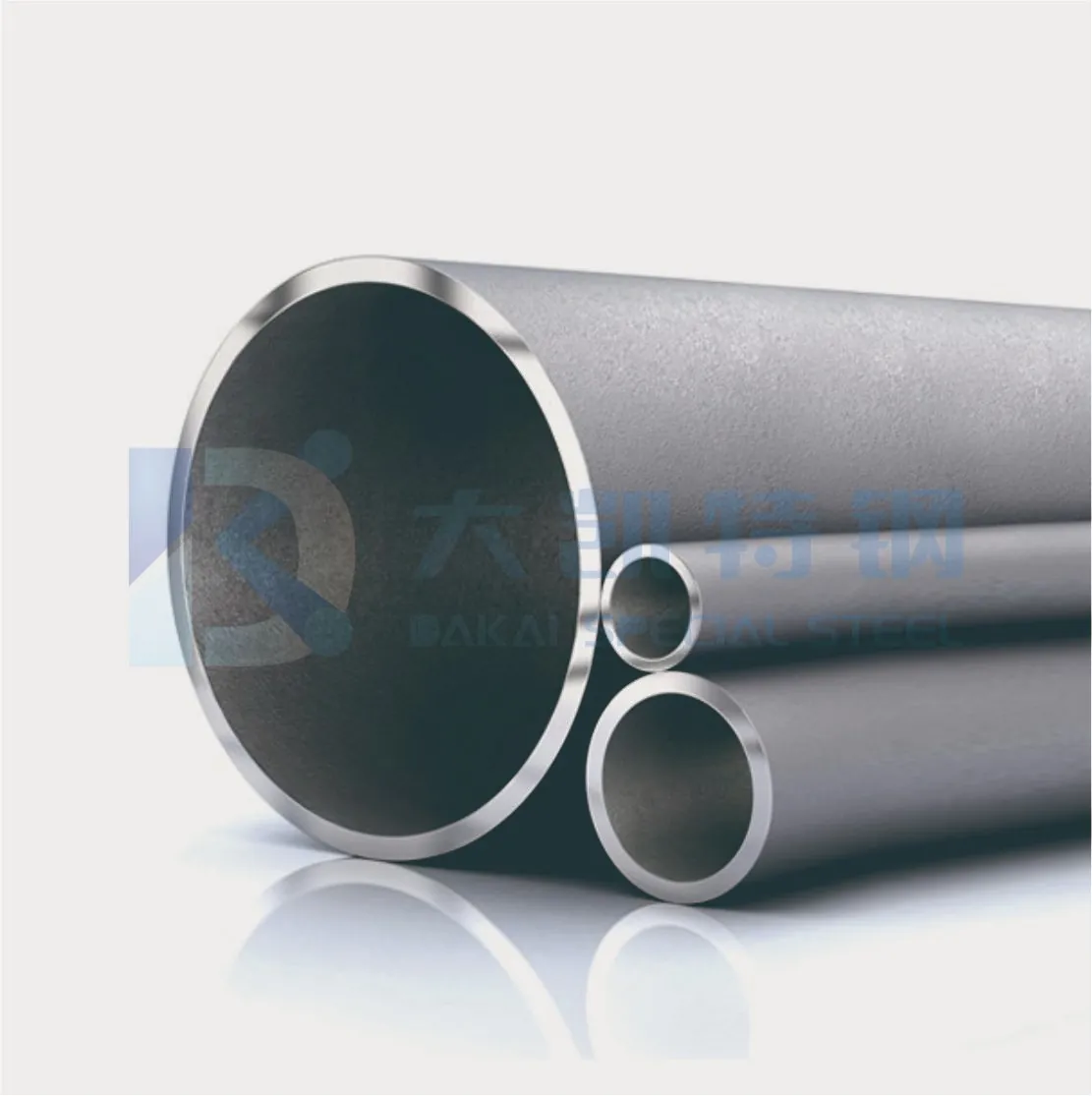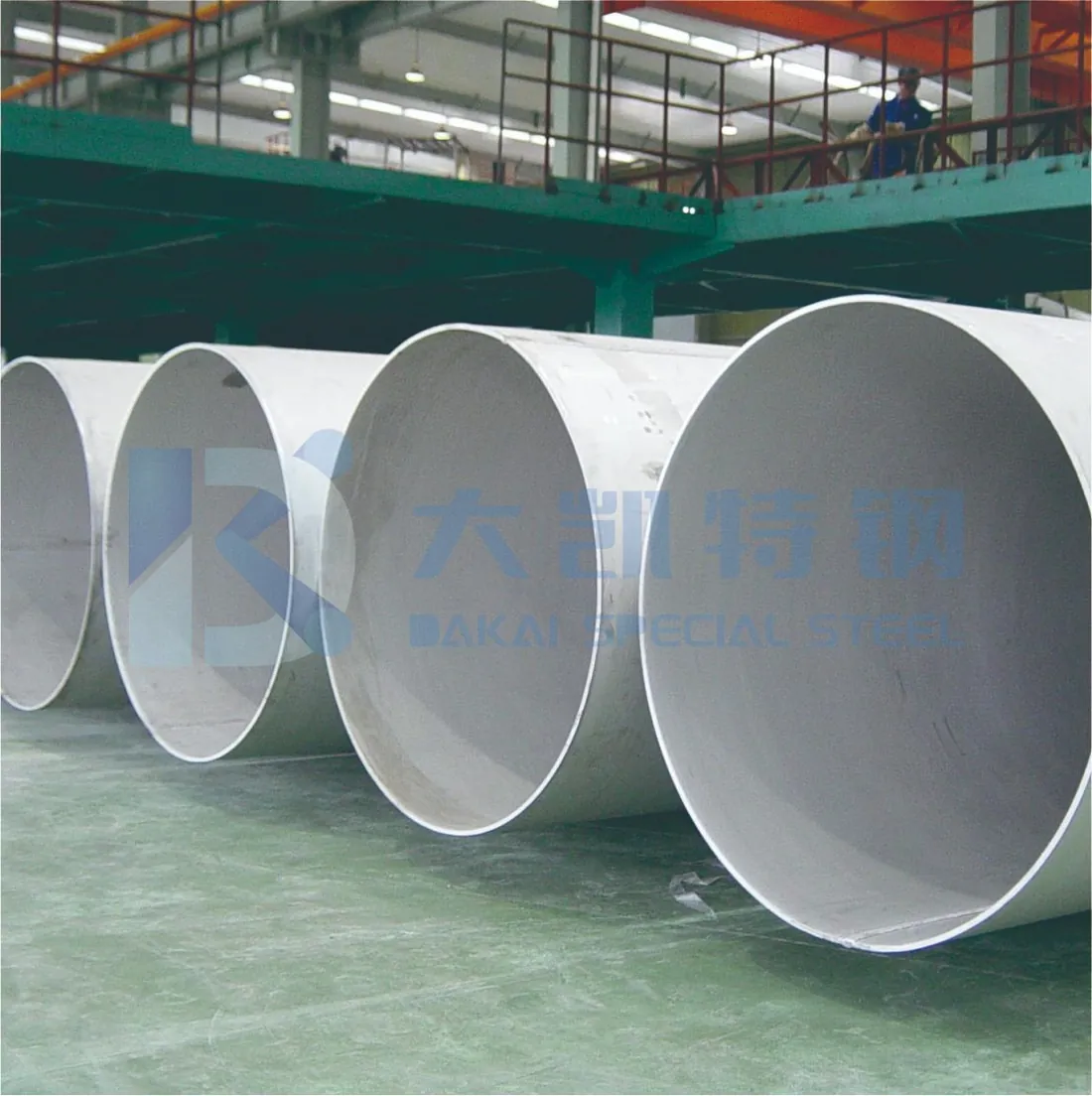
Seamless Stainless Steel Pipe for Mining Operations
Seamless pipe removes the weld from the pressure boundary, so in mining service grade and wall thickness are set by acid mine drainage, chloride and abrasion.
By Dakai Steel Technical Team
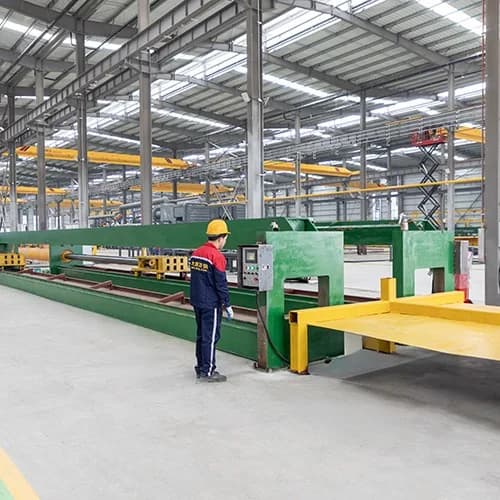
Mining process piping runs at pressure, moves abrasive slurry, and is wetted by water that is often acidic and chloride-bearing. A seamless stainless steel pipe removes the longitudinal weld from the pressure boundary, so wall thickness is set by corrosion and abrasion allowance rather than by a joint factor. This note covers the grade and schedule decisions that follow from that.
Why mining favors seamless pipe
Seamless pipe has no longitudinal weld, so ASME B31.3 assigns a longitudinal joint efficiency E = 1.00. Electric-resistance-welded pipe is typically taken at E = 0.85 at the same design temperature, which for identical diameter and wall gives roughly 18–25% higher allowable internal pressure in the seamless product. Where a mine water main or reagent line is pressure-rated on allowable stress, that difference shows up either as a thinner wall or as margin on a wall that has already been thinned by corrosion.
Corrosion: acid mine drainage
Acid mine drainage is the usual reason 304 is not enough. pH commonly sits between 2 and 5, and the water carries chlorides and sulfates leached from the ore body and from blasting residues. Under those conditions 304 is prone to pitting and crevice attack. 316L, with 2.0–3.0% molybdenum, reaches a pitting resistance equivalent (PREN) of about 24–26 and is the standard choice for mine water and reagent dosing. For higher chloride, wet–dry cycling, or service above roughly 60 °C, specify 2205 duplex (PREN 34–36) or 2507 super duplex (PREN 42–45).
Abrasion and wall thickness
Slurry lines are governed less by pressure than by metal loss. Solids content, particle size and flow velocity — usually held below 2–3 m/s for settling slurries — set the wear rate, and the answer is thicker wall, not a harder grade alone. Schedule 40 or 80 in small bore, and heavy wall or XXS in larger bore, are common for tailings and concentrate lines. We draw seamless pipe to non-standard wall thickness on request, so a 12 mm abrasion allowance does not have to be bought as an oversized standard schedule.
Grades for mining service
Four grades cover most of the service. 304 for neutral water, low-chloride duties and structural support. 316L for acid mine drainage, chloride-bearing water and reagent lines. 2205 for combined strength and corrosion resistance, where roughly twice the yield strength of 304/316 allows a thinner wall at the same pressure. 2507 for the most aggressive chloride and sour service, including subsea and high-pressure injection.
What to specify
Put these on the enquiry: product standard (ASTM A312, ASTM A269, EN 10216-5, or ASME B36.19 for dimensions), size as OD × wall — 88.9 × 7.62 mm, for example — rather than nominal bore alone, grade and heat treatment condition (solution annealed), and the inspection document required. An EN 10204 3.1 mill test certificate listing heat number, chemical composition and tensile results is the normal minimum.
State the non-destructive examination: hydrostatic test to the specified pressure, eddy current or ultrasonic test for wall and longitudinal defects, and pickled or bright-annealed finish where internal cleanliness matters. Random lengths of 6 m are standard; cut-to-length from 3 to 12 m with plain or beveled ends avoids site waste. Give us the medium, its pH and chloride content, and the design pressure — the grade, wall and NDT scope follow from those numbers.
Send the medium, pH and chloride level, design pressure and line size, and we will quote the grade, schedule and NDT package against your specification.