Stainless Steel Pipe Export Packing and Sea Freight
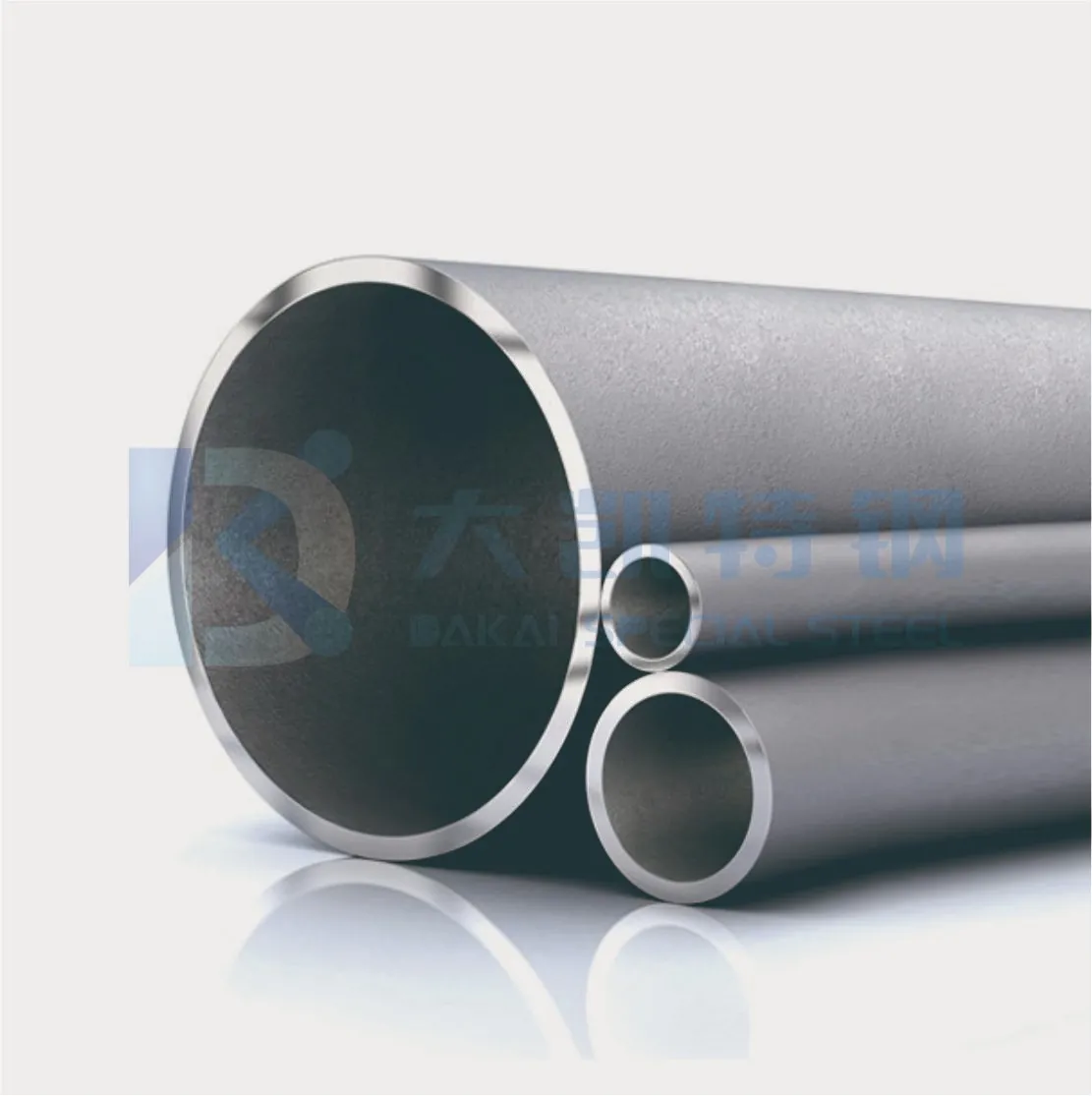
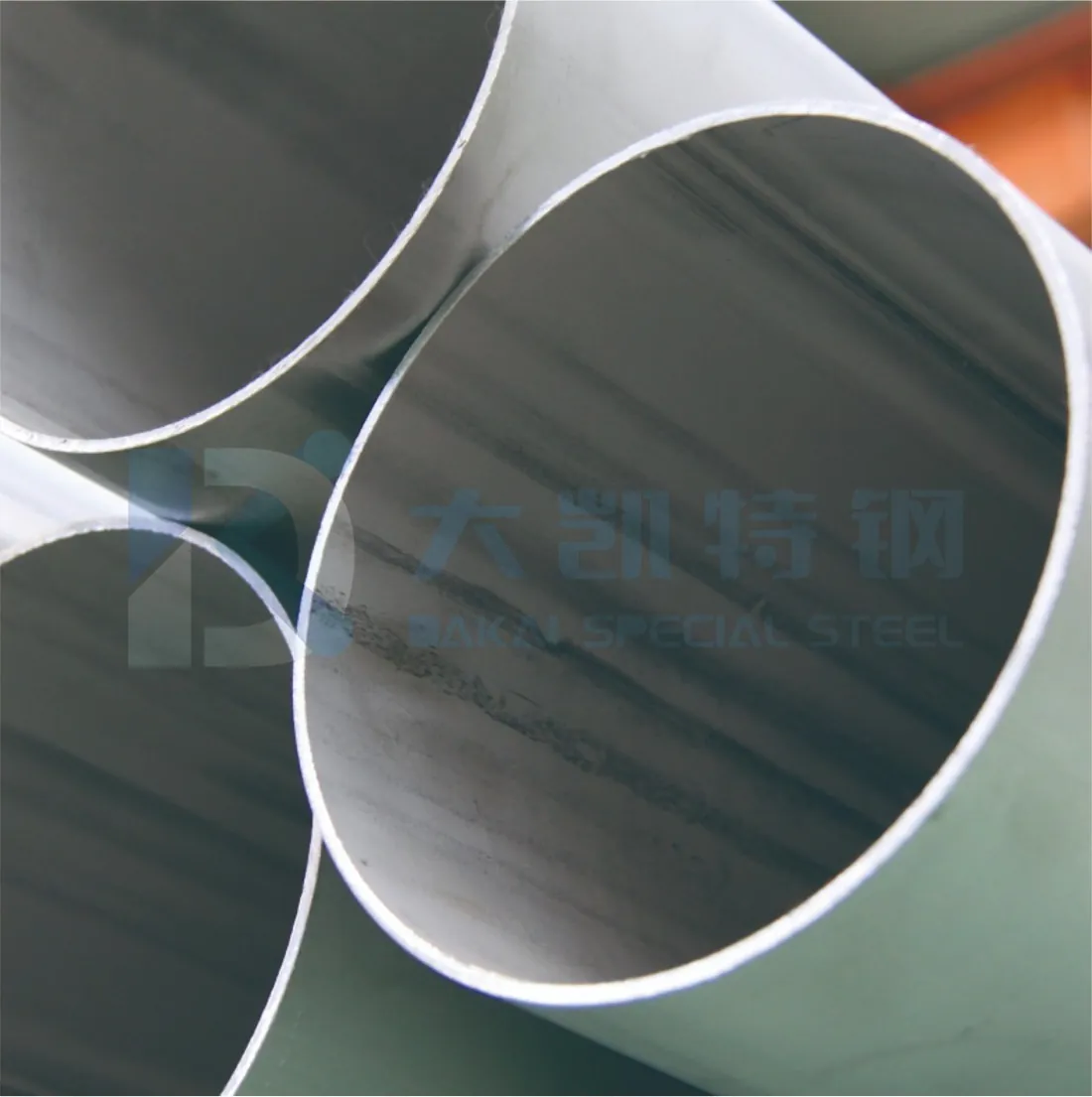
Hexagonal bundles, end caps and waterproof wrap protect the ends and surface of export stainless pipe; wooden cases cover precision and small lots.
By Dakai Steel Technical Team

Half the quality of an exported stainless steel pipe is decided in the mill; the other half is decided between final inspection and the moment the container doors open at the destination port. A 6 m length that leaves the plant at full wall thickness can still arrive oval, scratched, or ringed with rust bloom at the ends after 30–40 days at sea. Packing and shipping are not administration — they are the last process step that protects the dimensional and surface result you paid for.
Standard packing
Seamless and welded pipe up to about 219 mm OD ships in hexagonal bundles: pipes nested in a hexagon, strapped with steel banding at intervals of no more than 2 m and at least three straps per 6 m bundle, with plastic or rubber angle protectors under each strap so the band does not cut the surface. Both ends carry plastic caps — flat caps for plain ends, tapered caps for beveled ends — to keep out spray and grit. The bundle is then wrapped in waterproof film; for pickled, bright-annealed or 2B surfaces we add VCI paper. Bundle weight is held to 2–3 t for safe crane and forklift handling.
Precision and small quantities
Small quantities and precision tube do not justify a bundle. Instrument tubing, capillary, bright-annealed sanitary tube and cut-to-length pieces go into plywood cases: VCI paper wrap, plastic caps, foam or timber blocking so the tubes cannot move, and a case weight kept under about 1 t for two-man handling. Each case is marked with size, heat number and quantity. Solid-wood crating must carry the ISPM 15 heat-treatment stamp; plywood is exempt.
Container loading and marks
Six-metre lengths fit a 20 ft GP with roughly 100 mm to spare, so most orders ship in 20 ft containers; 40 ft HC is used when the buyer takes 12 m lengths or mixed sizes. Pipes are laid on timber dunnage and lashed to the container lashing rings with web straps at 2–3 m centres. Long and short lengths are nested together so no pipe spans unsupported between two bundles — a 6 m pipe overhanging a 3 m support will bend permanently under its own weight in a seaway. Payload is kept to about 25 t.
Every bundle and case carries the shipping marks from the buyer's mark sheet, stencilled on two faces: contract or PO number, size, heat number, package number, gross and net weight, dimensions, port of discharge, and handling symbols such as Keep Dry and Use No Hooks. Break-bulk shipments are additionally lashed in the hold and follow a stowage plan agreed with the shipowner; container shipments need the seal number recorded on the packing list.
Pre-shipment inspection
Third-party pre-shipment inspection can be arranged with SGS, BV, TÜV or Intertek at the works. A typical scope covers dimensional check of OD, wall (ultrasonic), length and straightness, visual and surface condition, positive material identification by XRF to confirm the grade, witness of the hydrostatic test, review of the mill test certificate, and loading supervision with photographs and the seal number. Allow three to five working days' notice before the container is sealed.
Documents that travel
Three documents travel with the steel. The EN 10204 3.1 mill test certificate, issued against the heat number, lists chemical composition and tensile results and references the hydrostatic and NDT tests. The packing list ties every bundle and case to size, heat number, piece count and gross/net weight. The certificate of origin (CO), issued through CCPIT, or a Form E or RCEP form where the destination qualifies, sets the duty rate. Heat numbers on the MTC, the bundle tags and the packing list must agree.
Send the size, grade, quantity and destination port, and we will quote FOB, CIF, CFR or DDP with the packing and document scope included.