Seamless vs Welded Stainless Steel Pipe: Pressure, Cost and Lead Time
Seamless pipe has no weld and a joint factor of 1.00; welded pipe trades roughly 18-25% of pressure capacity for lower cost and shorter lead time.
By Dakai Steel Technical Team
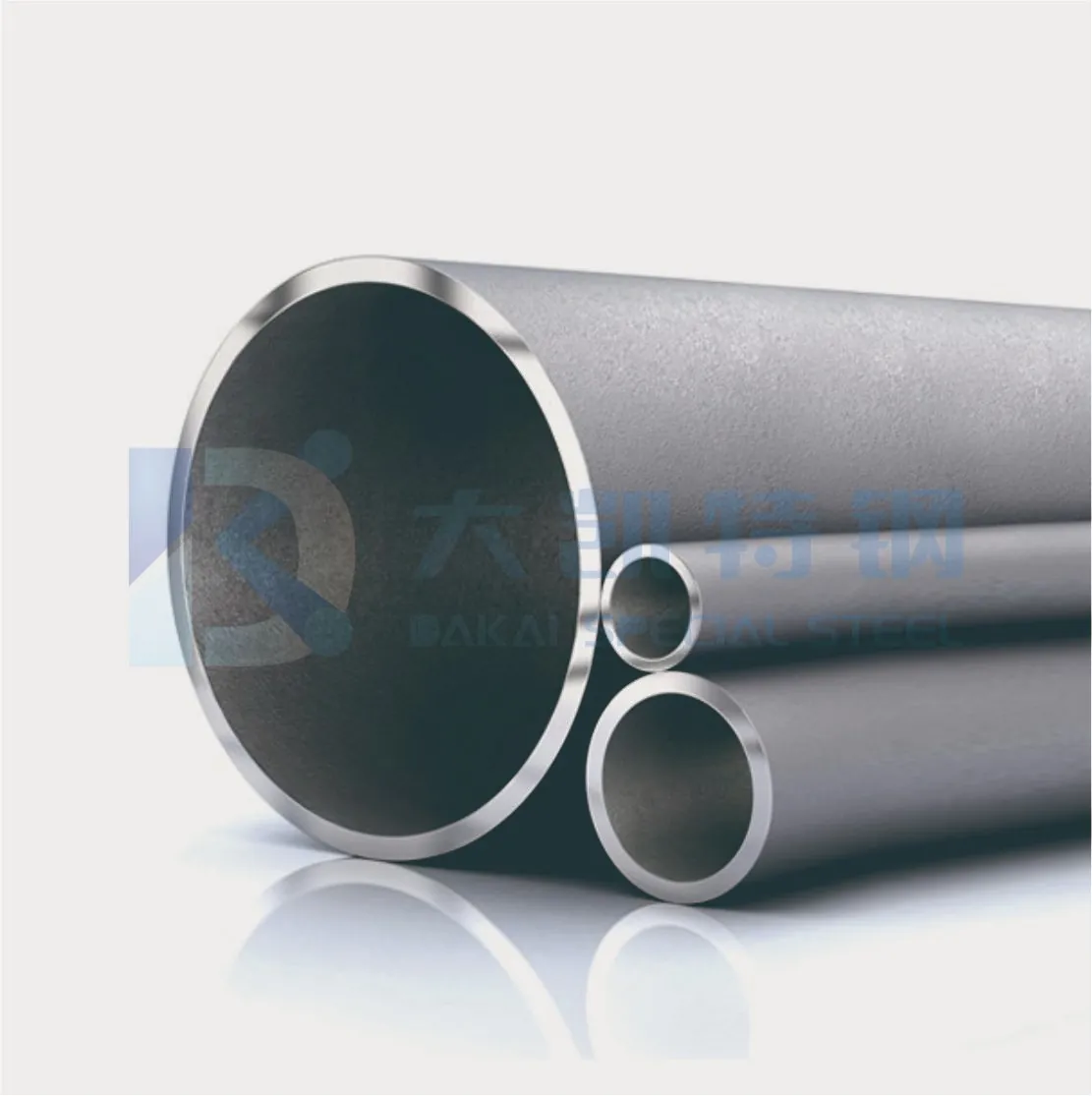
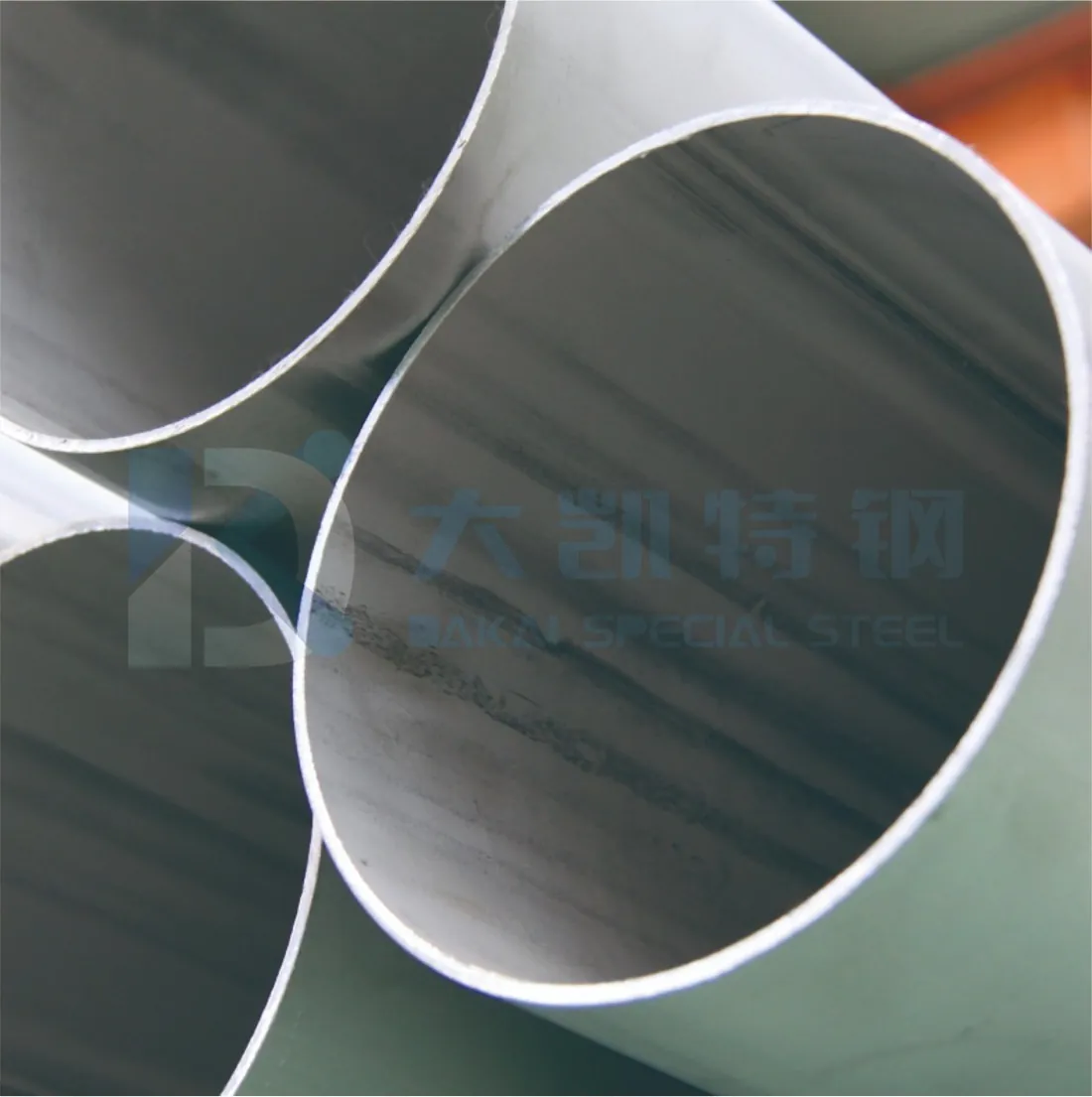
A seamless stainless steel pipe is one piece of metal with no weld; a welded pipe is formed from strip and joined along a longitudinal seam. That seam changes the pressure rating, the cost per metre and the lead time. What follows gives the joint factors, the size ranges and a four-step decision rule.
What seamless and welded actually mean
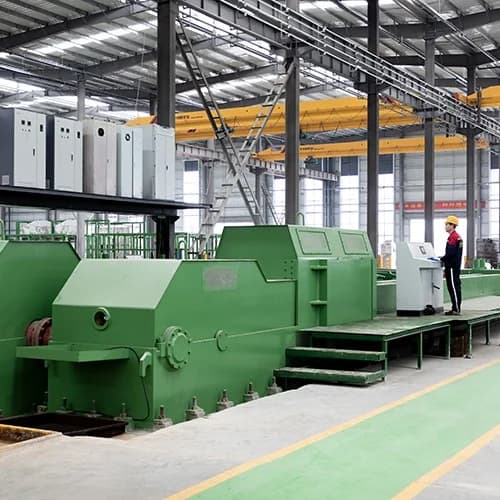
Seamless pipe starts as a solid billet or a pierced hollow shell and is reduced to size by cold rolling on a pilger mill or cold drawing over a mandrel, with annealing and pickling between passes. There is no weld anywhere in the length, so the wall is homogeneous around the circumference. Welded pipe starts as coiled strip: the strip is formed through a series of rolls into a cylinder and joined along its length by TIG or plasma welding, then the seam is annealed. That seam is the only structurally different region in the product, and every downstream property follows from it.
Pressure rating: the joint factor
ASME B31.3 sizes pipe with a weld joint efficiency factor E in the wall thickness equation. Seamless pipe takes E = 1.00. Welded pipe without full volumetric examination of the seam typically takes E = 0.80 to 0.85, depending on the specification and the extent of radiography; a welded pipe that is 100% radiographed can reach E = 1.00. Because allowable pressure scales with E, a welded pipe at E = 0.80 holds about 80% of the pressure of a seamless pipe of identical outside diameter, wall and grade, so the seamless route is roughly 18-25% higher at the same wall.
Cost and lead time
Welded pipe is the cheaper route per tonne in most sizes. Strip costs less than a pierced shell, the forming line runs continuously, and there is little end loss; the seam is a single pass. Seamless pipe carries more processing: piercing, several cold rolling or drawing passes, intermediate heat treatment and pickling, then straightening and inspection after each stage. That shows up as a higher conversion cost and a longer mill schedule. Indicatively, welded sizes are often available from stock or in three to four weeks, while seamless runs five to eight weeks when not stocked.
Where each wins
Seamless is the default for high-pressure and critical duty: oil and gas gathering and transmission lines, chemical process piping, hydraulic systems, high-pressure steam, and any line with pressure cycling or fatigue load. Welded pipe wins where the seam is not the limiting feature: heat exchanger and condenser tubes in thin wall and long lengths, structural and architectural tube, sanitary and food-grade lines where internal surface finish matters more than a seam-free wall, and large-diameter thin-wall pipe that seamless mills cannot produce economically.
Size ranges we supply
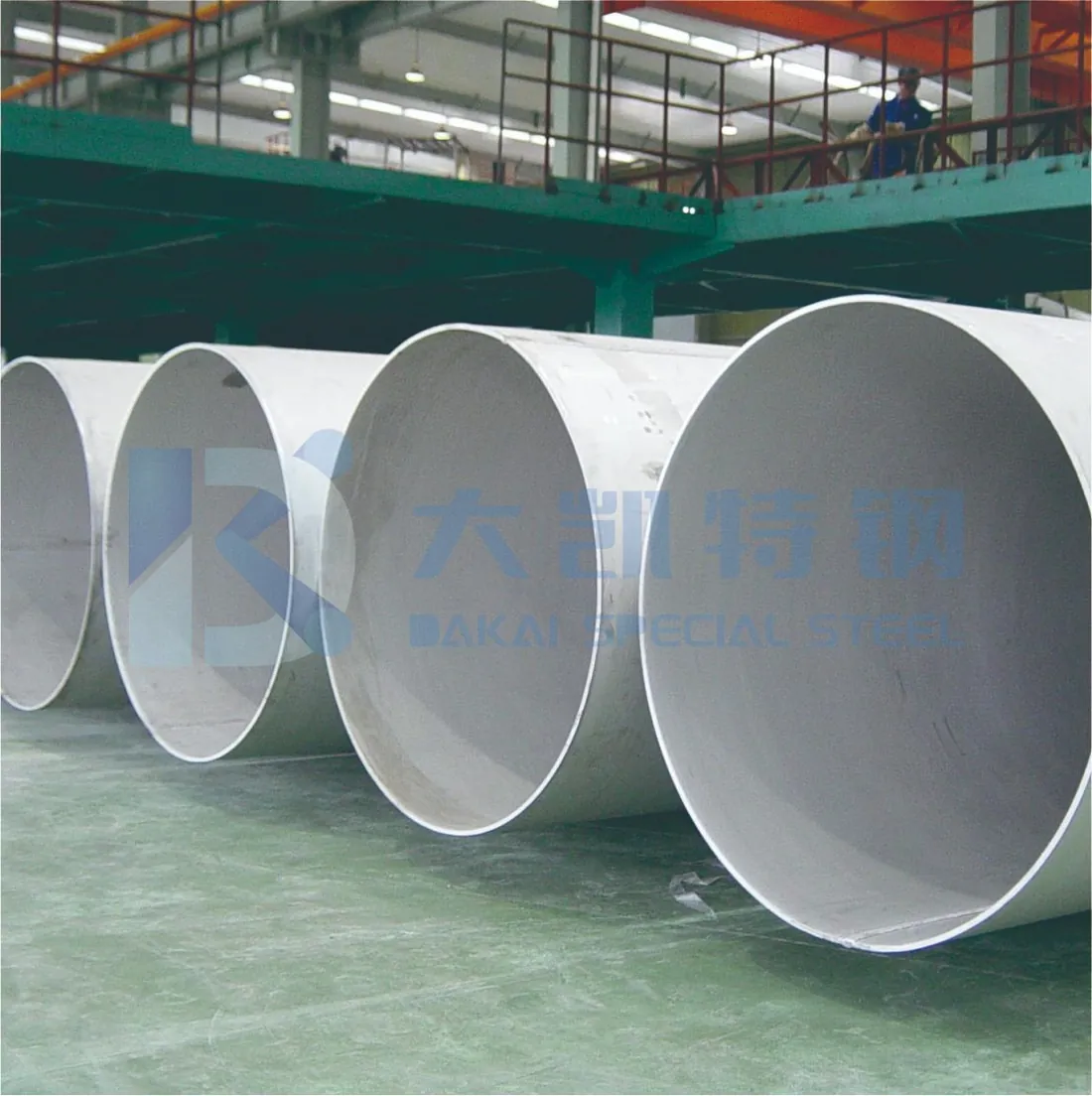
Seamless: outside diameter 6-630 mm, wall thickness 0.5-40 mm, in 304/304L, 316/316L, 321, 310S and duplex grades to ASTM A312, A213 and EN 10216-5. Welded: outside diameter 8-630 mm, wall thickness 0.5-12 mm, to ASTM A249, A269, A312 and EN 10217-7. Large-diameter industrial welded pipe runs from 219 mm to 2000 mm outside diameter for structural, water and low-pressure process service. Wall thickness and tolerance class are confirmed against the ordered standard before quotation.
A decision rule
Run four checks in order. First, calculate the required wall at the design pressure using the welded joint factor: if the answer needs E = 1.00 or a wall the welded mill cannot hold, specify seamless. Second, ask whether the service is corrosive, cyclic or fatigue-loaded: a seam and its heat-affected zone are crack initiation sites, which favours seamless in chloride or vibrating duty. Third, if budget or delivery date is the binding constraint and the pressure margin allows it, welded is the lower-cost, faster option. Fourth, if the size is above 630 mm outside diameter or the wall is thin relative to the diameter, welded — including large-diameter industrial pipe — is the only practical route.
Send the design pressure, medium, temperature and size range, and we will quote both routes — seamless or welded — against the same standard, joint factor and delivery date, so the comparison is made on identical terms.